I. Overview of the School
1. Structure
The School of Computer Science is committed to excellence in teaching as its central focus. It thoroughly implements the “One Core, Two Wings” talent development model (“One Core” refers to core professional competencies, while “Two Wings” refer to foreign language proficiency and applied engineering skills). The School is dedicated to cultivating high-quality, application-oriented professionals who possess a solid professional foundation, outstanding practical skills, and distinctive foreign language proficiency. These graduates will also demonstrate an international perspective, innovative spirit, and cross-cultural communication skills, enabling them to directly participate in international cooperation and competition. The School currently offers seven undergraduate programs: Computer Science and Technology (a provincial-level demonstration program for applied talent cultivation and a university-designated first-classprogram development initiative), Software Engineering (a university-level distinctive program), Network Engineering, Internet of Things Engineering, Digital Media Technology (a provincial-leveldistinctive program), Intelligent Science and Technology, and Mathematics and Applied Mathematics. Among these, the Network Engineering and Internet of Things Engineering programs are jointly established by the School and Guangzhou Togogo Network Technology Co., Ltd., an authorized Huawei partner. These programs feature specialized classes and implement industry-education integration for collaborative talent development.
2. Faculty and Student
The School of Computer Science currently has 65 full-time faculty members, including 26 with senior professional titles, 25 with doctoral degrees, 35 “dual-qualified” teachers, 2 “Outstanding Teachersof Nanyue,” 1 “Outstanding Teacher” and 1“Outstanding Educator” recognized by the Guangdong Association for Private Education, and 4 candidates for the university-level “Thousand, Hundred, Ten Project” in Guangdong Province. The school has also established two provincial-level teaching teams. The School has a total of 2,025 students.
3. Highlights
Leveraging the Guangdong Engineering Technology Research Center of Ubiquitous Manufacturing Augment (Department of Science and Technology), Ubiquitous Object Digitization Engineering Research Center of Guangdong Province (Department of Education), and the Institute of Intelligent Information Processing, the School has established the Research Team for Intelligent Analysis of Visual Media and Content Security and the Innovation Team for Applied Research on Mathematical and Physical Models. Over the past five years, the School has undertaken 13 provincial, ministerial, municipal and departmental research projects, published over 150 research papers, 62 of which were indexed in SCIE, obtained 20 authorized patents and over 80 software copyrights, and won four provincial-level outstanding paper awards. It has ranked first in the university’s research performance evaluation for three consecutive years. It has led 45 teaching and research projects, edited and published 12 textbooks and monographs, and received one Second Prize in the Guangdong Provincial Outstanding Teaching Achievement Award, one Outstanding Textbook Award, two First Prizes, one Second Prize, and one Third Prize in the Guangdong Computer Society Teaching Achievement Awards, as well as one Special Prize in the university-level Outstanding Teaching Achievement Awards.
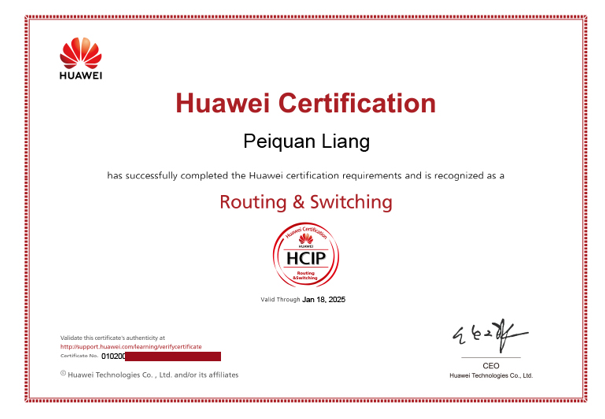
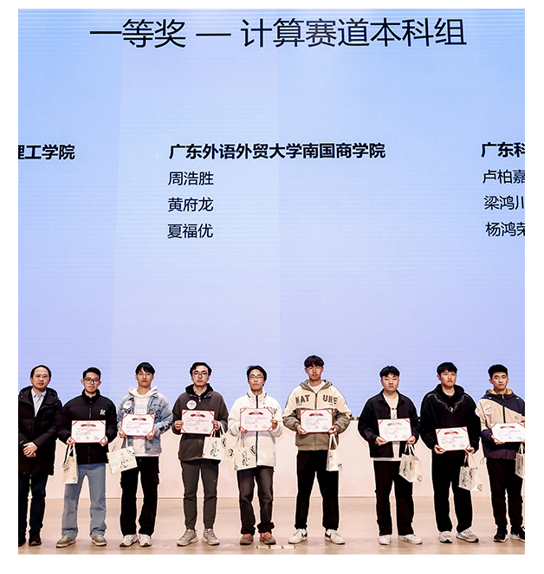
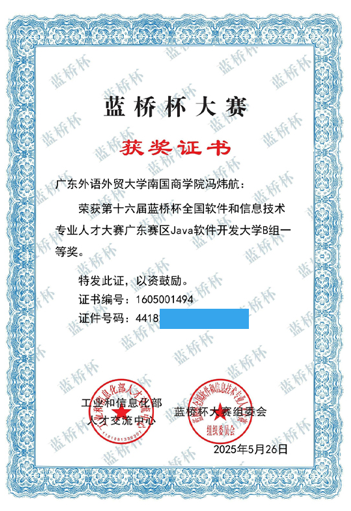
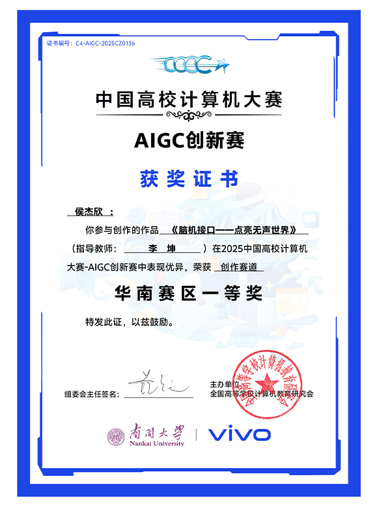
The School places great emphasis on cultivating students’ innovative abilities, practical skills, and engineering literacy. It actively organizes and provides in-depth guidance for students participating in major national competitions such as the “Challenge Cup”National College Students’ Extracurricular Academic and Technological Works Competition, the National College Students’ Mathematical Modeling Competition, the China College Students’ Computer Design Competition, the Lanqiao Cup National Software and Information Technology Talent Competition, and the Huawei ICT Competition. At the same time, the School is dedicated to building a “cradle for engineers,” encouraging students to take the National Computer Technology and Software Professional Qualification Examination (a Proficiency-based certification) to obtain intermediate vocational qualification certificates—such asSoftware Designer, Database System Engineer, and Multimedia Application Designer—jointly issued by the Ministry of Industry and Information Technology and the Ministry of Human Resources and Social Security. The School also supports students in obtaining Huawei certifications (HCIP, HCIE) to enhance their competitiveness in the industry. The quality of talent cultivation continues to improve, with the graduate employment rate consistently exceeding 98%. Numerous graduates have secured positions at renowned technology companies such as Alibaba, Baidu, Tencent, Net Ease, and PCCW, as wellas major financial institutions including HSBC, and various state-owned enterprises. This has provided a solid talent foundation for the high-quality development of the information industry nationwide, particularly in Guangdong Province, earning the program a strong reputation in society.