
On the afternoon of May 20, SCBC held a meeting on the internationalization of the affiliated schools and departments in the International Conference Hall of the Administration Building. Chairman Ding Xiaojun, Vice President Chen Linhan, and Assistant to the President Zhu Zijang attended the meeting. The meeting was attended by the heads of each school (department), the officials in charge of international cooperation, the Party branch secretaries, and all faculty and staff members of the Office of International Cooperation and Exchange.
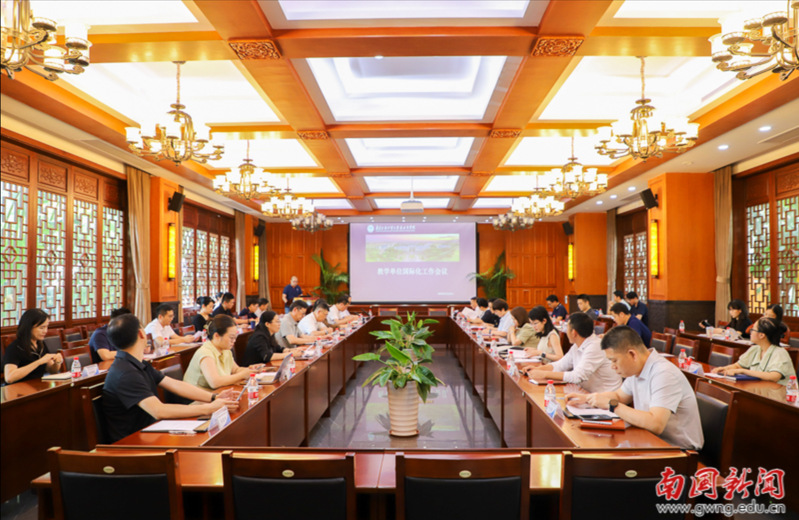
At the meeting, the heads of SCBC’s 13 affiliated units delivered specialized reports in turn. Closely aligning with their respective disciplinary strengths, institutional positioning, and existing foundations, each unit focused on the “15th Five-Year Plan” for the internationalization of education. They elaborated on their goals for internationalization, innovative measures, current challenges, and phased implementation plans. The reports comprehensively covered key areas such as Sino-foreign cooperative education, international exchanges for faculty and students, the development of internationalized curricula, international research collaboration, and international student education. They clearly outlined each unit’s overall approach, strategic direction, and key priorities for internationalization in this new phase, providing detailed, first-hand insights to empower the university in coordinating top-level design and implementing targeted measures.
Following the presentation, Vice President Chen Linhan delivered a special address based on the findings of the university’s recent special survey on the internationalization of education. He fully affirmed the phased achievements made in SCBC’s internationalization efforts over the past five years and outlined plans for enhancing and upgrading internationalization during the 15th Five-Year Plan period. He emphasized that the entire university must ensure that all teaching units fully assume their primary responsibilities and optimize the evaluation system for internationalization contributions. Furthermore, barriers to resource sharing between disciplines and schools must be broken down to continuously expand the scope of overseas partnerships and increase access to high-quality international educational resources. Comprehensive platforms for faculty internationalization must also be established to fully enhance the international capabilities of the teaching staff through channels such as overseas study visits, academic exchanges, conference hosting, and the recruitment of international experts. Finally, leveraging reciprocal international cooperation projects, SCBC must steadily advance pilot programs for English-immersion instruction, the training of English-immersion teaching faculty, and the development of an internationalized curriculum system to address existing shortcomings in the university’s operations.
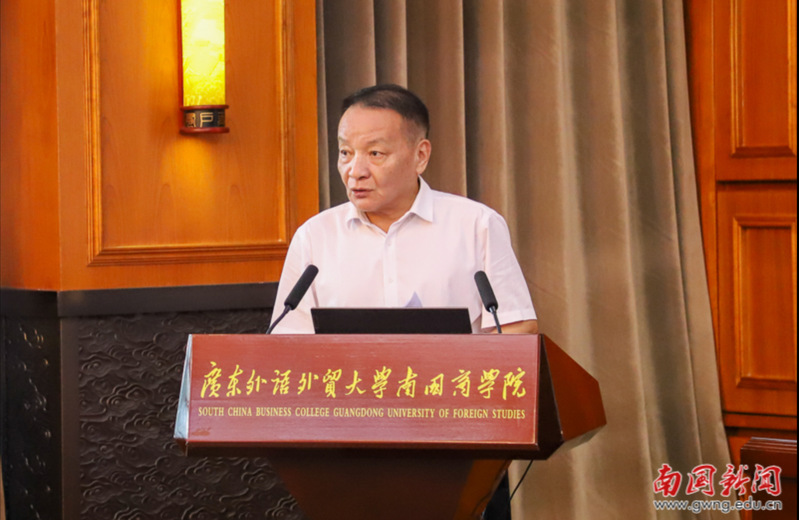
Concluding Remarks by Vice President Chen Linhan
SCBC Chairman Ding Xiaojun delivered the closing remarks. He emphasized that the internationalization of education is a core strategic direction for the university’s high-quality development. He stressed that SCBC’s internationalization efforts must be grounded in reality, focused on tangible results, and highlight achievements, while resolutely rejecting vague and superficial approaches.
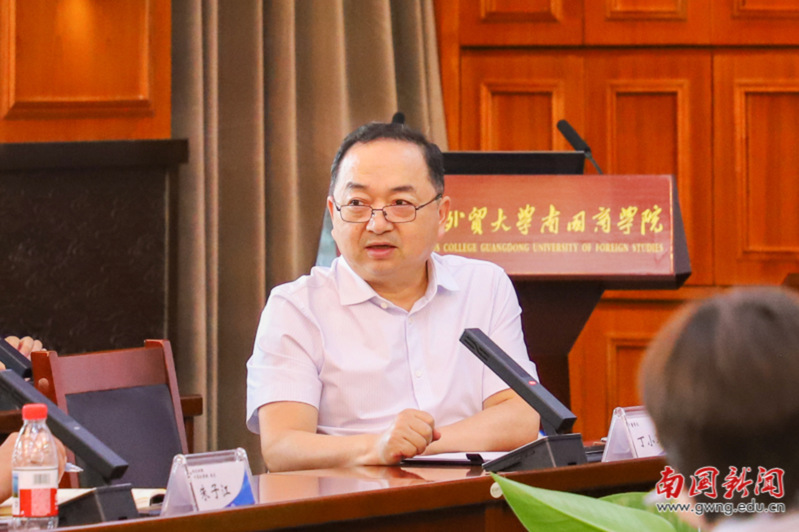
Concluding Remarks by Chairman Ding Xiaojun