
SCBC Delegation Visits Bai Long Holdings Group
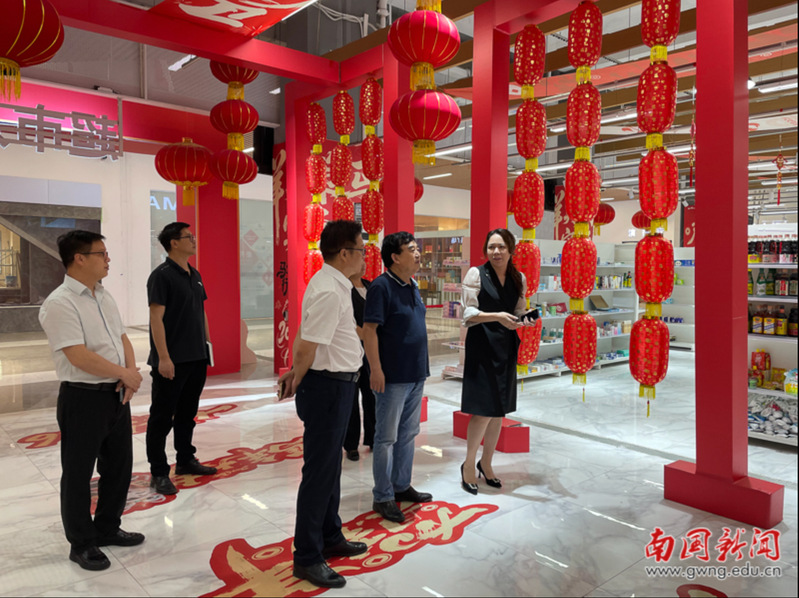
To deepen the integration of industry and education, precisely meet the talent needs of the live-streaming e-commerce industry, and broaden channels for student internships and employment, on April 8, Xu Zhichao, Party Secretary of SCBC, and Wang Guanyi, Vice President of SCBC, led a delegation to Bai Long Holdings Group to conduct a corporate visit aimed at expanding job opportunities and negotiating university-industry cooperation. The two parties engaged in in-depth discussions on key areas such as talent cultivation for live-streaming e-commerce, construction of internship and training bases, joint establishment of order-based classes, and graduate employment recommendations, reaching consensus on multiple areas of university-industry cooperation.
SCBC Faculty Members Elected as Standing Council Member of the Provincial Textbook Development Committee
On April 11, the Guangdong Provincial Association of Higher Education Teaching Management held its leadership transition meeting for the Textbook Development and Management Committee in Guangzhou. 200 council candidate representatives from 115 institutions across the province attended the meeting. SCBC was invited to participate as a member institution. Following a secret ballot, Cai Haiyun, Deputy Director of the Office of Academic Affairs of SCBC, was elected as a standing council member of the second term, and Professor Li Chunmei from the School of English Language and Culture of SCBC was elected as a council member.
SCBC Faculty and Students Win Awards in Guangdong Province’s “Colorful Villages” Practical Activities
Recently, the list of winners for the 2025 Guangdong Province “Colorful Villages: Renewal in the Sunlight” series of practical activities was officially announced. SCBC’s faculty and students have been deeply engaged in rural communities, grounding their work in practical research and creation, and have achieved remarkable results. A total of four research reports from our university received honors (one second prize and three third prizes). During this initiative, our faculty and students closely adhered to the program’s objectives, conducting in-depth field research in rural communities. By focusing on key areas such as distinctive rural industries, the integration of culture and tourism, and the preservation of intangible cultural heritage, they used detailed research data and in-depth case studies to vividly illustrate the vigorous development of rural areas of Guangdong. This effort tangibly demonstrates SCBC’s commitment to serving rural revitalization.
SCBC Holds Foreign Language Discipline Construction Conference
On the afternoon of April 14, SCBC held a conference on the development of the Foreign Languages discipline and the reform of “Foreign Language +” talent cultivation in Academic Lecture Hall C202. Executive President Wang Mingyu and Vice President Guo Guihang attended the meeting, along with heads of relevant schools and administrative departments, department chairs, program directors, and key faculty members.
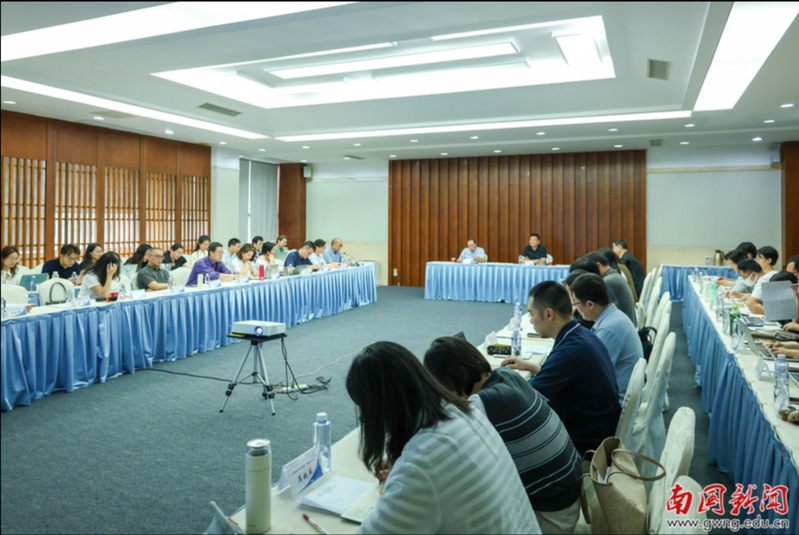
The conference focused on core issues such as overcoming challenges indiscipline development, building distinctive majors, and reforming and innovating the “Foreign Languages +” talent cultivation model, with participants jointly exploring pathways for high-quality development in foreign language, literature discipline construction and talent cultivation. Executive President Wang Mingyu delivered an inspirational keynote speech on the reform concepts for “Foreign Languages +” talent cultivation, systematically elucidating the core principles of foreign language education development in the AI era. He emphasized that artificial intelligence serves as a vital enabler for foreign language education, while humanistic exchange, grounded in principle and imbued with warmth, remainsthe irreplaceable core strength of foreign language professionals. Grounded in the university’s actual development context, he systematically constructed a three-dimensional framework for foreign language talent encompassing knowledge, skills, and qualities, and clearly proposed the goal of cultivating "triple-qualified" comprehensive and practical foreign language talents possessing asense of national and family responsibility, a global perspective, and professional skills. In line with the “Foreign Languages + Major” reform direction, he also proposed establishing ageneral competency indicator system across four dimensions—language application, professional knowledge, interdisciplinary integration, and comprehensive literacy—thereby charting a course for the high-quality development of our university’s foreign language disciplines and the cultivation of interdisciplinary talent.
Pioneer Concept! SCBC Officially Establishes Guangdong Engineering Technology Research Center of Ubiquitous Manufacturing Augment
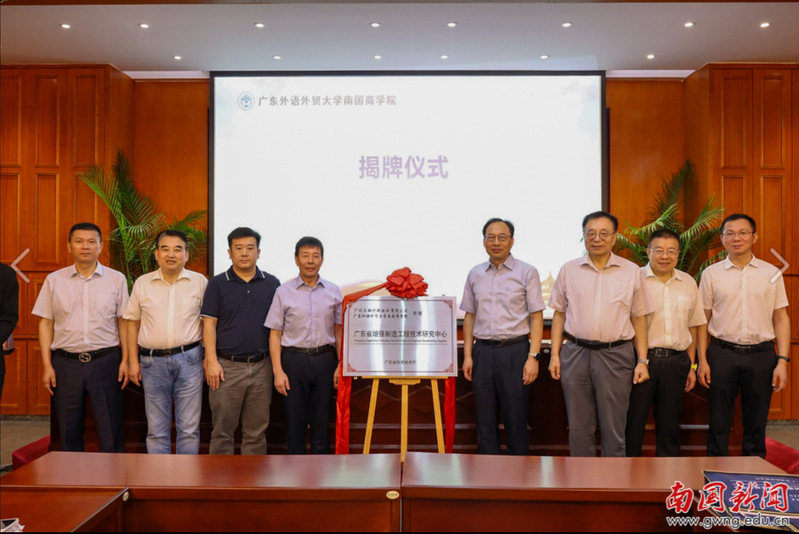
On April 17, the “Guangdong Engineering Technology Research Center of Ubiquitous Manufacturing Augment,” jointly established by SCBC and Guangzhou San Tuo Identification Technology Co., Ltd., was officially inaugurated. Attendees included Zhou Mutang, President of the Guangdong High-Tech Enterprise Association; Luo Like, Secretary-General of the association; Wang Jinnian, Academician of the International Academy of Astronautics and Professor of Guangzhou University; SCBC leaders including President Wang Hua and Executive President Zhang Hanlin; leaders from Guangzhou San Tuo Identification Technology Co., Ltd.; representatives from industry associations; and representatives from both university and enterprise teams as well as faculty members.
SCBC executive president Zhang Hanlin stated that both the university and the enterprise will focus on intelligent integrated manufacturing, pan-manufacturing, and virtualized manufacturing, promoting the research and development of core technologies and their transformation into practical applications, jointly cultivating high-level engineering and technical talents, and striving to build the center into a first-class and influential research and development base for enhanced manufacturing technology in the province.
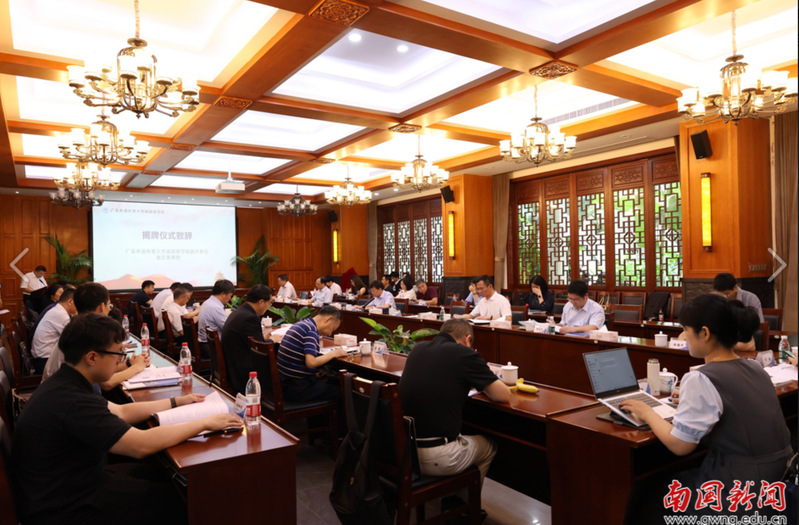
Following the unveiling ceremony, Zhou Mutang, Wang Hua, and Zhang Hanlin presented letters of appointment to the center’s management and technical directors, key personnel of the operational body, the expert team of the Technical Committee, and the Chair of the Center. Subsequently, Professor Qi Deyu, Chief Scientist of the Center and Dean of the Institute of Digitization Science and Technology of SCBC, delivered a presentation outlining the center’s development goals, research framework, and implementation strategy. Academician Wang Jinnian presided over the review meeting, during which experts offered practical guidance on refining research directions, securing funding, and ensuring the practical application of research outcomes.
That afternoon, attendees visited Guangzhou San Tuo Identification Technology Co., Ltd. to tour the research and development center and production facilities. They also held a round table discussion on how the center’s technologies can empower enterprise development and facilitate deep integration between industry, academia, and research. The session clarified key areas for future collaboration and implementation mechanisms to accelerate the adoption of enhanced manufacturing technologies in corporate production lines and industry applications.
Two Schools of SCBC Establish Alumni Associations
On April 18, the inaugural meeting of the alumni associations for the School of Western Languages and Cultures and the School of Computer Science was held in the International Academic Lecture Hall of Building H on campus. The event brought together Gu Yeli, Vice President of the General Alumni Association and the first presidentof SCBC; Lai Zhili, Vice President of the General Alumni Association and Vice President of SCBC; representatives from regional alumni associations; heads of the two schools; faculty and student representatives; and alumni from various graduating classes.
At the outset of the ceremony, Lai Zhilin delivered an opening address. On behalf of the university, he extended warm congratulations on the establishment of the two alumni associations. He noted that the School of Western Languages and Cultures leverages its multilingual strengths to deepen international exchanges, while the School of Computer Science keeps pace with the digital era by focusing on digital and intelligent innovation; both schools have injected strong momentum into the university’s high-quality development. Marking the university’s 30th anniversary, the establishment of these alumni associations serves not only as a significant tribute to the occasion but also as a crucial step in enhancing and upgrading the university’s alumni relations. He urged the alumni associations to serve as a bridge connecting alumni, a catalyst for the schools’ development, and as ambassadors for SCBC, using alumni efforts to support their alma mater. He encouraged alumni to leverage their professional expertise to strive for excellence, cherish their ties to the university, and jointly build a new bright future.
At the conclusion of the event, Gu Yeli delivered a speech. He fully affirmed the commendable spirit of alumni who have established themselves in various industries while upholding and practicing the “Spirit of SCBC.” He offered a heartfelt message to all alumni: “While at SCBC, you were proud of SCBC; after graduation, SCBC will be proud of you.” He expressed his hope that the alumni associations of both schools would further strengthen their ties, rally the strength of alumni across the country to offer suggestions for the university’s development, and provide support and guidance for the growth of current students.
SCBC Holds Meeting for the Alumni Association and the Board
On April 20, SCBC held a meeting for the alumni association and the board in the International Conference Hall of the Administration Building. Gu Yeli, Vice President of the General Alumni Association and the first President of SCBC; Lai Zhili, Vice President of the General Alumni Association and Vice President of SCBC; Weng Lin, Secretary-General of the General Alumni Association; and other faculty leaders gathered together with alumni association council members and representatives from across the country and overseas.
At the meeting, Vice President Lai Zhilin, on behalf of SCBC, extended a warm welcome and sincere regards to the alumni who had returned from afar. He provided a comprehensive review of the new progress and achievements the university had made over the past year in teaching and research, infrastructure upgrades, disciplinary innovation, and internationalization.
Subsequently, Weng Lin, the secretary-general of the Alumni Association, presented the 2025 work report, reviewing the alumni work of the past year. During the free exchange session, representatives from various branches and industry associations actively spoke and offered suggestions, engaging in a lively discussion around core topics such as industry-academia integration, cross-border expansion, cross-cultural communication, and the planning for the 30th anniversary of SCBC.
Finally, Professor Gu Yeli, the first president of SCBC who witnessed its growth from its inception to its flourishing, delivered a summary speech and expressed earnest expectations: We should use the SCBC 30th anniversary as a bond to maximize the cohesion of alumni, faculty, staff, and people from all walks of life, and comprehensively showcase SCBC's 30 years of educational achievements and academic excellence. He encouraged all alumni to take the 30th anniversary as a new starting point, forge ahead with determination and perseverance in their respective positions, and walk hand in hand with SCBC as it embarks on a new journey, creating even greater brilliance.
Donation Ceremony for the Yang Juhua Scholarship Fund Held in SCBC
On April 20, the eighth donation ceremony for the “Yang Juhua Scholarship” was held on campus. Attendees included Ms. Yang Juhua, a 2008 graduate of the Japanese major at SCBC and CEO of Hong Kong Huacheng Group; Mr. Xu Yongmin, Executive Deputy General Manager of Hong Kong Huacheng Electronics Co., Ltd.; Mr. Gu Yeli, the first president of SCBC and Vice President of the Alumni Association; representatives from the School of Eastern Languages and Cultures; and representatives from the Alumni Association Office. Following arigorous selection process conducted with fairness, impartiality, and transparency, three students—Chen Zhishan and Shen Shenzhao from the Japanese major Class of 2023, and Ren Jiaxin from the Japanese major Class of 2024—were selected to receive this round of funding.
Alumna Yang Juhua is an outstanding graduate of the Japanese major Class of 2008 and currently serves as CEO of Hong Kong Huacheng Group. Since establishing the scholarship fund in 2017, she has donated to support her alma mater for eight consecutive years, demonstrating her gratitude for the education she received through concrete actions.
SCBC Executive President Zhang Hanlin Delivers Keynote Speech at the 2026 Annual Conference of the Guangdong-Hong Kong-Macao Universities Alliance for Regional and Country Studies
On April 18, the “2026 Annual Conference of the Guangdong-Hong Kong-Macao Universities Alliance for Regional and Country Studies—Regional and Country Studies Empowering the APEC Shenzhen Summit and New Journal Launch” was held in Shenzhen. The conference brought together representatives from the Guangdong Provincial Federation of Social Sciences, as well as universities and high-level research institutions from Guangdong, Hong Kong, and Macao to participate in this academic gathering. Two special issues, Area Studies and Greater Bay Area Studies,were released concurrently, and in-depth discussions were held on how area studies can serve major diplomatic events hosted by China and contribute to the construction of an independent knowledge system for Chinese philosophy and social sciences. Professor Zhang Hanlin, Executive President of SCBC, and Researcher Luo Ying, Deputy Dean of the Institute of Area Studies of SCBC, were invited to attend the conference on behalf of the university.
Zhang Hanlin attended the ribbon-cutting ceremony for the launch of Area Studies and delivered a keynote speech titled “National Security and the High-Quality Development of Area Studies.” Researcher Luo Ying delivered a keynote speech titled “Progress and Challenges in Polar Research at SCBC,” sharing the latest achievements and challenges in the field of polar research.
Center of Polar Issues Studies Signs Agreement with Arctic State Institute of Culture and Arts
On April 17, SCBC’s Center of Polar Issues Studies held an in-person friendly exchange event on campus with the Arctic State Institute of Culture and Arts (ASICA). As the world’s only public university dedicated to Arctic Indigenous peoples, ASICA has formally established a partnership with SCBC and signed a framework agreement. The scope of cooperation covers several key areas, including Arctic Indigenous culture and arts, permafrost and glaciers, and Arctic shipping routes. Zhang Hanlin, Executive President of SCBC; Xu Jun, Deputy Director of the Research Office; and Luo Ying, Vice Dean of the Institute of Area Studies, engaged in an in-person friendly exchange with Daria Burnasheva, Senior Researcher, and Ulyana Vinokurova, Distinguished Professor, from ASICA. This exchange laid a solid foundation for future joint research, talent development, and academic exchanges between the two institutions.
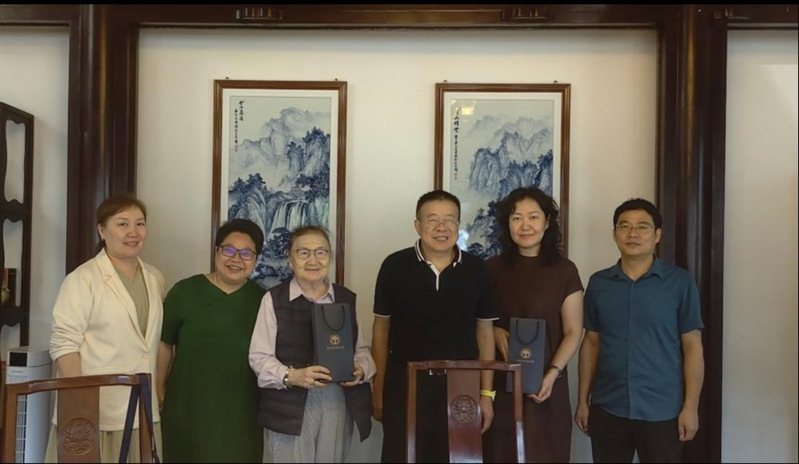
During the exchange, Zhang Hanlin provided a comprehensive overview of China’s achievements in science and technology development and its supportive policies, covering core areas such as breakthroughs in new energy technologies, innovations in the digital economy, and mechanisms for the commercialization of research outcomes. Russian experts highly praised China’s rapid development in the field of scientific and technological innovation and expressed a strong desire to deepen cooperation in areas such as polar research, digital technology, and green energy. Representatives including Xu Jun and Luo Ying participated in the discussions and conducted preliminary consultations on specific cooperation directions and implementation pathways.
The exchange took place in a cordial and enthusiastic atmosphere. Both sides reached a consensus on issues such as regular mutual visits, joint research, and talent cultivation, laying a solid foundation for future practical cooperation between China and Russia in the academic and scientific fields.
SCBC Holds High-Quality Construction of Micro-major Programs Meeting
On April 21, SCBC held a meeting on the high-quality development of micro-majors in Conference Room 309 of the Administration Building. The meeting was chaired by Vice President Zeng Yongqiang and attended by relevant officials from the Office of Academic Affairs and 13 academic units. Each unit presented its new micro-major development plans, which are designed to fully align with industry needs, support student growth and development, promote the deep integration of micro-majors into students’ primary majors, and enhance the quality and efficiency of industry-education integration.
Atthe meeting, Zeng Yongqiang emphasized that the development of micro-majors at our university aims to inject new momentum into traditional majors and drive their optimization and innovation. These initiatives must not only align with social development and industrial needs but also be grounded in the university’s educational mission and distinctive characteristics, thereby effectively supporting students’ future development.
SCBC Hosts Exhibition on Industry-Education Integration Course Outcomes
On April 18, an exhibition showcasing the outcomes of industry-education integration course development and teaching implementation, organized by the Office of Academic Affairs, was held in Smart Classroom G301. The event was chaired by Luo Huiming, Deputy Director of the Office of Academic Affairs. Six faculty members shared their course development experiences and teaching achievements on-site, while several experts attended to provide feedback and guidance. The exhibition covered multiple fields, including entrepreneurship education, traditional culture, engineering technology, film and television special effects, and financial practice. It comprehensively showcased the phased achievements of our university’s industry-education integration curriculum development and provided practical pathways for deepening university-enterprise collaborative education and enhancing classroom teaching quality.
SCBC Holds Mid-Term Assessment Meeting for Interdisciplinary Projects and Doctoral Workstations
On the afternoon of April 22, SCBC successfully convened a mid-term assessment and exchange meeting for the “Interdisciplinary Integration and Innovation” projects and doctoral work stations in Room 309 of the Administration Building. The meeting conducted a comprehensive review and provided feedback on the research progress, interim achievements, budget utilization, existing issues, and future plans of the first batch of six “Interdisciplinary Integration and Innovation” projects and the first batch of three doctoral work stations. Executive President Wang Mingyu attended the meeting and delivered aspeech providing guidance on the evaluation process. Leading scholars from the university’s first-class disciplines—including Foreign Languages and Literature, Business Administration, Computer Science and Technology, and Applied Economics—as well as the heads of the Education Master degree training programs served as evaluation experts. The meeting was organized by the Office of Discipline Development and chaired by Wu Xinling, Director of the Office of Discipline Development. Project leaders, doctoral candidates, and collaborating mentors attended the meeting.
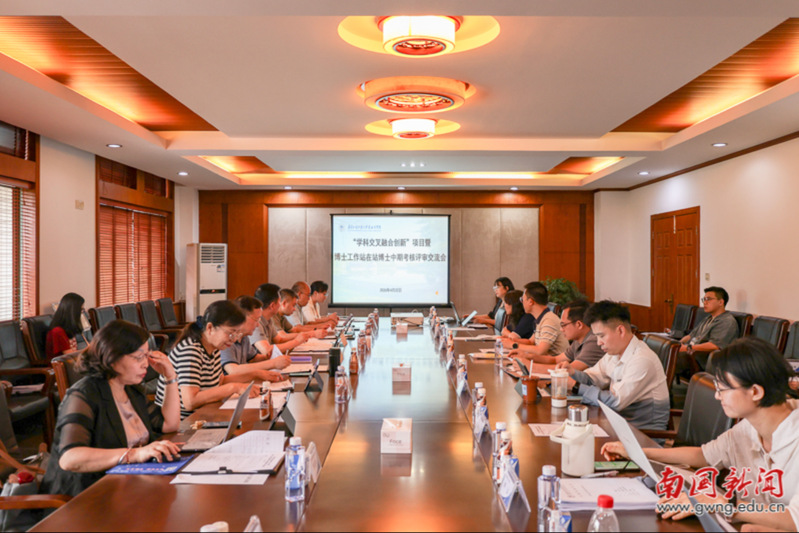
In his guidance speech on the review process, Executive President Wang Mingyu emphasized that at present, the discipline construction has entered a crucial stage of connotative development and integrated innovation. Efforts should be made to build an open disciplinary ecosystem featuring cross-linking within the university, resource sharing among universities, and deep integration of industry-university-research. It is necessary to clearly define the categories, directions and platforms of interdisciplinary disciplines, and cultivate disciplinary clusters that resonate with industries. Relying on platforms such as doctoral forums and doctoral salons, an academic atmosphere of cross-fusion should be cultivated to promote the transformation of discipline construction from "single breakthrough" to "overall improvement". He reaffirmed that project application and stationing for research must adhere to four core principles: maintaining a problem-oriented approach, multi-disciplinary cross-institutional collaboration, serving major strategies, and pursuing independent development. This ensures the smooth and efficient progress of the work.